Dedication

This blog is dedicated to the amazing staff at the New Canaan Public Library in New Canaan, Connecticut.

Saturday, July 14, 2012

Tomatoland: How Modern Industrial Agriculture Destroyed Out Most Alluring Fruit by Barry Estabrook, 2011, * * * *


Supermarket produce sections, bulging with a year-round supply of perfectly round, bright-red-orange tomatoes have become all but a national birthright. But in Tomatoland, which is based on his James Beard Award-winning article, "The Price of Tomatoes,", investigative food journalist Barry Estabrook reveals the huge human and environmental cost of the $5 billion fresh tomato industry.  Fields are sprayed with more than one hundred different herbicides and pesticides.  Tomatoes are picked hard and green and artificially gassed until their skins acquire a marketable hue.  Modern plant breeding has tripled yields, but has also produced fruits with dramatically reduced amounts of calcium, vitamin A, and Vitamin C, and tomatoes that have fourteen times more sodium than the tomatoes our parents enjoyed.  The relentless drive for low costs has also fostered a thriving modern-day slave trade in the United States. Estabrook traces the supermarket tomato from its birthplace in the deserts of Peru to the impoverished town of Immokalee, Florida, a.k.a. the tomato capital of the United States.  He visits the laboratories of seedsmen trying to develop varieties that can withstand the rigors of agribusiness and moves on to commercial growers who operate on tens of thousands of acres. Throughout the book Mr. Estabrook presents a who's who cast of characters in the tomato industry: the avuncular octogenarian whose conglomerate grows one out of every eight tomatoes eaten in the USA; the ex-Marine who heads the group that dictates the size, color and shape of every tomato shipped out of Florida;  the US attorney who has doggedly prosecuted human traffickers for the past decade; and the Guatemalan peasant who came north to earn money for his parents' medical bills and found himself enslaved for two years.  Tomatoland is not as philosophically rich as Michael Pollan'sOmnivore's Dilemma nor as adrenalized as Eric Schlosser's Fast Food Nation. However, it reads like a suspenseful whodunit as well as an expose of today's agribusiness system and the price we pay as a society when we take taste any thought out of our food purchases. 

Monday, June 4, 2012

The Lifeboat by Charlotte Rogan, 2012, * * *

Grace Winter, the anti-heroine of the novel is nothing if not a survivor.  Twenty-two years old and clearly very attractive, she narrates the book a good dose of unreliability. When the ocean liner transporting Grace and her very rich new husband to the United States on the eve of WWI,  suffers a catastrophic explosion, she wedges her self into Lifeboat 14, along with 38 others. There she staves off the mounting hysteria around her and aligns herself with John Hardie, an experienced sailor who takes control of the food and water and make instantaneous, God-like decisions.  As the boat is seriously over crowded, for any to survive, a few must volunteer to go over the side, and you can bet that Grace won't be one of them. Framed by scenes of Grace after the ordeal - she has been charged, along with two other survivors, or murder of one of their companions - the bulk of the novel traps you in the disintegrating world of the lifeboat, buffeted by squalls and by a brewing power struggle. While I had hoped for a more intense story about the dynamics of people unknown to each other being placed in peril on a lifeboat, this turned out to be a strangely dispassionate narrative from only one person's perspective.  Grace is a seriously flawed person, and that usually offers a literary opportunity for growth.  However, Grace's flaws were with her before the lifeboat, remained with her throughout the time on the sea, and her trial, and she came out the other side essentially unchanged.  There are many loose ends left unresolved, showing them to be no more than red herrings and filler -- and the book ends with a shrug. 

Thursday, May 31, 2012

The Good Father by Noah Hawley, 2012, * * * *

Imagine your child was accused of a heinous crime.  How far would you go to find out the truth and protect him?  At what point would you start blaming yourself?  Noah Hawley's latest page turner, The Good Father examines this scenario and poses heartbreaking questions about parenting, love's limits, and good versus evil.  Told from the perspectives of both the determined, anguished father and his lost son, Hawley takes you deep into a family's history and unearths a tragic back story, while keeping the reader guessing about the son's culpability.  Dr. Paul Allen is a well respected man living a comfortable life with his second wife and their family when his world is blown apart by the news that his son Danny, from his first marriage, has murdered the Democratic nominee for President of the United States.  Paul strives to understand what has happened, refusing to entertain the idea that his son has carried out these acts. The narrative of The Good Father is shaped by Paul's obsessive need to understand how his remote but seemingly  normal child could join Lee Harvey Oswald and John Hinckley on the roster of creepily unassuming American assasins.    It is also a  story of a young man on a quest for identity and meaning, and a father who can't face the truth that he was never quite the father his son needed. It makes you uncomfortable and gets you thinking that you may not know your own child.  The Good Father packs an emotional punch, not as a harrowing investigation of evil, a critique of gun violence in America, or a guide to good parenting,  but as an account of a father finally accepting his son, for better or worse. 

Wednesday, May 30, 2012

American Dervish by Ayad Akhtar, 2012, * * *


Hayat Shah is an impressionable adolescent and the only child of a well-to-do secular family. He finds his comfortable existence upended by the arrival of his mother's childhood friend who has fled a life of abuse and repression in Pakistan. Mina, a strikingly beautiful woman and a fan of Henry Miller and F. Scott Fitzgerald, captivates Hayat by schooling him in her liberal interpretations of the Qu'ran.  She inspires his spiritual awakening at a time that coincides uneasily with his sexual awakening.  Hayat's marginally religious mother is too preoccupied trying to catch her philandering husband's attention to notice her son's growing alienation while his defiantly secular father is too busy cheating, drinking and wallowing in his own cynicism to pay his introverted son much attention beyond the occasional lecture about religion.  Mr. Akhtar's observations of the  clashes between old world and new, between secular and sacred might seem familiar to readers of both contemporary and classic literature.  Strong thematic affinities and plot parallels exist between this work and more than a handful of other - "The Namesake" by Jhumpa Lahiri; "Love Marriage" by V. V. Ganeshananthan and Pauls Toutonghi's "Red Weather," a 2006 comedy about Latvians in Milwaukee.  The yearning and conflicted emotions of Hayat suggest a PG-13 version of a Philip Roth character or more repressed version of Eugene Jerome, Neil Simon's alter ego in "Brighton Beach Memoirs."   When you are away from the character of Mina, however, it is nearly impossible to find one other redeemable character in the Indian-Pakistan community of Muslims. From the Islamic Center to the wedding hall, their fellow worshipers are like characters from a Herman Cain speech - fanatical, under-evolved, sheep-like, and willfully in-assimilated. It's such a shift from the complex characters inside the Shah home that the story line suffers after it sinks into the one-dimensional world outside their door.  Although he illuminates the age-old struggle of separating spirituality from dogma, faith from cultural baggage and intent from political agenda, this is only successful half the time.  If only he had enough faith in his readers to present Hayat and Mina's complex relationship with their religion - and the world around them - as something other than exceptional.  

Tuesday, May 29, 2012

Wild: From Lost to Found on the Pacific Coast Trail by Cheryl Strayed, 2012, * * * *

Cheryl Strayed was 26 years old in 1995, and a novice hiker, when she decided to embark on a solo trek along the Pacific Crest Trail (PCT), a scenic footpath that zigzags over the Sierra Nevada and Cascade mountain for 2,650 miles between Mexico and Canada.  Her memoir, Wild,  opens with the impetus for her journey: the sudden death of her 45-year old mother just 49 days after being diagnosed with lung cancer.  Despondent and disoriented in the wake of her loss, Strayed self-destructs.  She cheats on, and then leaves, her beloved husband, shoots heroin, has an abortion and adopts a new last name.  Not sure what she is in search of and woefully unprepared, she sets off with a guidebook, a collection of poems, hiking books that are too small, an ice ax she doesn't know how to use and a ridiculously overweight pack dubbed "Monster."  Strayed's writing conveys the rigors and rewards of long-distance hiking: aches, pains, loneliness, persistent hunger, and blistered, bloody feet.  There are bears and rattlesnakes, the real threats of dehydration and hypothermia, and camp rangers who call her "baby" and invite her back to their cabins. She talks about moments of lust, desire, and kinship with other hikers with satisfying frankness. Having tackled the Appalachian Trail over three decades ago, I found her book to be a fascinating physical and psychological journey through a wilderness of despair to a renewed sense of self. Strayed portrays herself as both weak and strong, daunted and determined, desperately lonely and fiercely independent.  As she moves through her contradictory feelings during the three months on the PCT, she becomes someone new.  It is a remarkable journey. 

Tuesday, May 8, 2012

Ed King by David Guterson, 2011, * * *

Guterson stormed the publishing industry with his 1994 debut novel Snow Falling on Cedars.  It was a poetic and intensely atmospheric drama that brimmed with issues of morality - simple right and wrong. In three subsequent novels, Guterson changed speeds and became less oriented around plot and community choosing instead to hone in one specific individuals, their inner demons replacing real-world adversaries.  Still, Guterson retained a recognizable style which included his reverence for nature, particularly the rugged, rain-drenched landscapes of the Pacific Northwest, along with his earnestness and dogged attention to detail which continued to define him as a writer. Those days are over. In Ed King, Guterson's unassuming traits have been supplanted by caustic cynicism and ironic humor.  Here Guterson uses key elements of Oedipus the King as scaffolding for a snarky novel skewering contemporary values. In 1962, a 34-year old actuary seduces an underage au pair producing a child who, abandoned, is adopted by the prosperous King family and named Edward.  But Ed is not a king in name only; he grows into the 'king of search,' a man in the mold of Steve Jobs or Bill Gates who runs a company akin to Google called Pythia.  The characters are superficially realized and relentlessly ridiculed; the cure for the guilt that Ed feels over causing a stranger's death is the right antidepressant. Ed has copious encounters with older girls, then older woman, a recurring theme Guterson employs to trumpet his point. Ed is not only Sophocles's Oedipus but also Freud's, thanks to an oversized and over simplified Oedipus complex.  Ed King is an interesting undertaking but the lack of basic storytelling catches up with Guterson as this master of subtle scenes and emotionally resonant moments has managed to write a book devoid of either.  As a result, the superficial characters and their unrelenting amorality eventually begin to grate, as does the preordained story line.

Monday, May 7, 2012

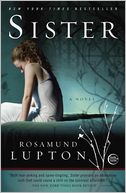
Sister by Rosamund Lupton, 2010, * * *

Sister is billed as a complex psychological thriller and is told as a series of "letters" from Beatrice to her dead sister, Tess. At the beginning of the book, you are aware that Tess is dead and that Beatrice was the one to discover her killer.  It is also evident that the police bungled the case and can't be trusted. Lupton takes on serious issues in the book including physical abuse, financial vulnerability, gene therapy and single mothers and has a great deal to say about how women are treated in society.  However, I appear to be in the minority in my review of this novel.  At first I found the premise interesting as Beatrice, a young English woman living in NYC, is contacted that her beloved sister in London has gone missing.  Beatrice immediately flies to London and begins an arduous investigation of her younger sister's death, which was presumed to be a suicide.  The novel, through a series of memos to Tess, establishes a chronology of her search mixed with memories of their childhood and relationship.  During the analysis into the death of her sister, you are introduced to a long-suffering mother, a brother who died of cystic fibrosis, Beatrice's fiance, and Tess's relationships with a wide group of people.  There is also a question as to whether the events existed or are a product of Beatrice's imagination.  If the events did not exist, there is no reason for the subplot in the novel.  All of this results in a weak crime plot in contrast to the depiction of the relationships sisters and mothers. I did not think the ending was shocking, although it was intended to be,  and I am not sure that the story was about the search for Tess's killer or rather the redemption of relationships and Beatrice's progressive failing mental and physical health.  By the ending, I simply did not care.